
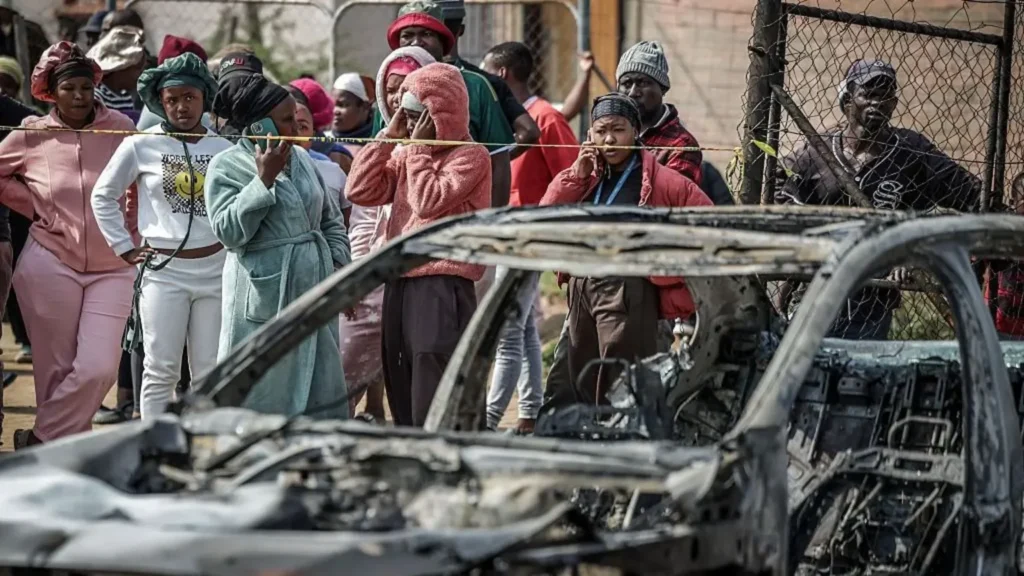
The recent incident in South Africa is making headlines. The country, for the past few days, has been facing grief and anger, leaving people near Johannesburg. In addition, Cape Town has been struggling to understand how ordinary nights of socializing turned into scenes of bloodshed.
According to reports from the BBC, the attacks in South Africa on Saturday and early Sunday also injured at least 27 people. Although the local police have already launched investigations into the gunmen, the nearby residents and families of the injured have not yet received any response.
A look back at the recent gun attacks in South Africa
If we look back, the first attack took place at a tavern in Wedela, in the West Ran area. It was southwest of Johannesburg, South Africa.
Reportedly, the police said eight armed men entered the venue carrying AK-47 rifles and pistols before opening fire on patrons. It was reported that approximately 17 people were killed, including 13 men and four women, while 15 others were wounded.
Police said eight armed men entered the venue carrying AK-47 rifles and pistols before opening fire on patrons. Seventeen people were killed, including 13 men and four women, while 15 others were wounded.
The gun attack reportedly ended with the gunmen running away from the scene, leaving behind the frightened survivors, grieving relatives and a community searching for meaning. Authorities are investigating whether the shooting was connected to organised crime, gang rivalry, or disputes linked to illegal mining in the region.
Approximately 10 Killed Near Cape Town
After 4 hours of the first attack, violence erupted again, this time it was in Lwandle township near Cape Town.
Gunmen opened fire at an entertainment venue linked to a local shisanyama, a popular establishment where people gather for barbecued meat, drinks and conversation. As per the reports, approximately 10 people died in the shooting, and 11 others were injured.
According to reports from AP News, five victims died at the scene in South Africa. The remaining victims succumbed to their injuries as they were being taken to hospital. For residents, the attack struck at the heart of everyday life, turning a familiar gathering place into fear.
Is the deadly pattern in South Africa returning?
The latest attack making headlines came only five days after another mass attack near Durban. On Tuesday, at least 11 people, including a pregnant woman, were killed when multiple gunmen reportedly attacked a house party in KwaMakhutha Township.
The close timing of the attacks has intensified concerns that mass shootings are becoming increasingly common across South Africa. Earlier, the gun attacks at taverns, shebeens and social venues have often been linked by investigators and experts to gang rivalries, extortion, illegal liquor businesses and disputes within criminal networks.
The recent attacks in South Africa have recalled the horror of previous tavern shootings in the country. In recent years, gunmen have repeatedly targeted venues where people gather to drink, celebrate or meet friends.
Looking at the past years, the 2022 shootings at a tavern in Soweto and at venues in Pietermaritzburg and Katlehong exposed the vulnerability of township communities and prompted renewed calls for stronger action against illegal firearms.
Communities Demand Answers
The community and family of the injured are still searching for answers from the authorities. The recent toll is more than a number; each victim was part of a household, a friendship circle, or a community.
Residents are now asking why heavily armed attackers continue to find opportunities to strike and why warnings about illegal guns and organised crime have not led to lasting change.
South Africa has one of the world’s highest murder rates, and the latest shootings have added to a growing sense of insecurity. Police have appealed for information from witnesses as investigations continue.
Until the suspects are arrested and the motive becomes clear, the two attacks will remain connected not only by their timing, but also by the painful pattern they reveal: places meant for community and celebration are repeatedly becoming crime scenes.