
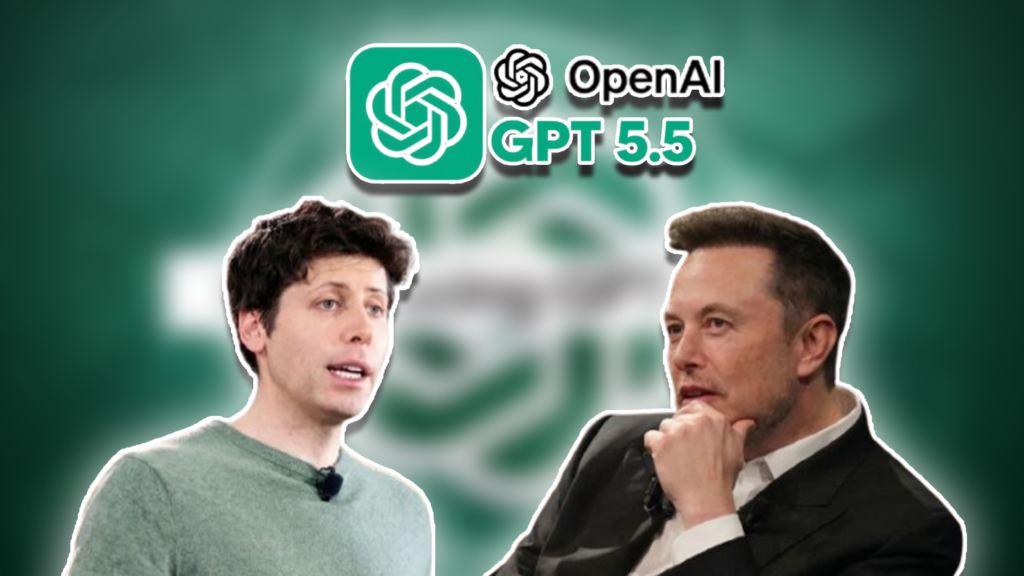
If we look back at the battle between Sam Altman and Elon Musk, there is much to grab attention. The lawsuit followed continuous courtroom exchanges where Elon Musk accused OpenAI of abandoning its non-profit mission and sought sweeping governance changes.
After spending days with the lawsuit and allegations, Sam Altman used his social media to invite Musk to OpenAI’s exclusive GPT-5.5 launch, which is to be held in San Francisco. The social media post shared by Elon Musk saying, “The world needs more love,” surfaced on the internet as the company closed event registration due to high demand.
The invitation drew attention in contrast to Musk’s testimony, in which he claimed that OpenAI’s shift toward a for-profit model betrayed its original mission.
Elon Musk filed a lawsuit against OpenAI, which eventually turned a long-running rift into a high-stakes legal fight. One of the significant questions that the lawsuit raises is about OpenAP, whether it stayed true to its founding mission or shifted too far towards the profit margins.
Sam Altman vs Elon Musk and the Battle over Profit vs. Mission
Reportedly, Elon Musk is seeking more than $134 billion in damages. Moving ahead, he even raised a question against the company for moving forward from its non-profit ideation and built a structure that, in the current scenario, places most of the value in a for-profit arm.
While the ongoing court exchanges were happening, Musk once acknowledged that he “didn’t read the fine print” where OpenAI highlighted its structure. However, he still claims that the outcome is clear. According to Musk, what began as just a public- minded effort has now turned out to be a commercial engine.
On the other side, OpenAI rejects these claims made by Musk. The AI giant claims that its structure allows it to raise the vast sums needed to develop advanced AI systems. It argues that without outside capital, progress at this scale would not be possible.
Similarly, Microsoft, another major leader in the industry, also denies any such wrongdoing. Moreover, it supports OpenAI’s position that the current model balances mission and funding needs.
If you look closely, then the ongoing dispute has some deep roots. Musk and Sam Altman together co-founded OpenAI back in 2015. During that time, OpenAI was framed as a non-profit focused on safe and broad AI development. Later on, Elon Musk stepped back and left the board in 2018.
The reason behind Musk’s departure from the board in 2018 was disagreements over leadership and direction. Since then, the two leaders have taken very different paths.
The Musk-Altman Rivalry and the Future of AI Governance
Elon Musk has become one of OpenAI’s most vocal critics, making headlines. Moreover, he often warns about the risks of powerful AI and raises some serious questions about how it can be controlled. But on the other side, interestingly, he launched his own company, xAI, another competitor in the world of AI.
The rising conflict between Musk and Altman is now playing out in public as well. A few days back, Sam Altman invited Musk to a private launch event for a new AI model. Altman’s special invitation drew attention because it came in the middle of a legal battle. Some see it as a gesture meant to ease tension, and others take it as a calculated step to shape public perception.
However, these gestures are not new in high-profile disputes. It has always been observed that industry leaders often try to project calm or goodwill, even while fighting hard in court. Even though it is unclear how much this matters in legal terms. Courts only rely on evidence, not optics.
The stakes are high because the outcome may shape how AI firms organize themselves. If the court sides with Musk, it could raise questions about hybrid models that mix nonprofit goals with profit-driven units. Other companies may face pressure to clarify their structures. Investors may also take a closer look at how value flows within such setups.
What will happen next?
If OpenAI prevails, it may reinforce the idea that large-scale AI work needs flexible funding models. The costs of research, talent, and infrastructure continue to rise. Companies argue that strict nonprofit models cannot support that pace. A legal win would strengthen that argument.
For now, the case remains unresolved. It sits at the intersection of law, technology, and ethics. It also reflects a personal split between two figures who once worked toward a shared goal. What began as a joint effort to guide AI for public good has turned into a direct contest over control, purpose, and value.